When I first started, I nearly turned the identity of a 'tarot reader' into a joke. One summer night seven years ago, a friend brought a friend to my home. I put on an air of profound mystery, spread out a black silk cloth, lit some sage, and thought I had memorized several tarot books inside out. A timid girl asked me what to do about her boyfriend, with whom she had been in a cold war for two weeks. She drew the Knight of Swords reversed. I blurted out, 'The Knight of Swords reversed means this man is impulsive, reckless, and a terrible communicator. Your relationship can't move forward and will probably end.' Before I finished, her face turned pale. She stood up abruptly, her voice trembling: 'You don't know him at all! He's been under immense pressure from a project lately, unable to sleep all night. How can you say that about him!' That crash-and-burn became the most expensive lesson of my tarot career. It slapped me awake from the dream of 'absolute pronouncements': If you haven't even touched the heart across from you, what right do you have to define someone's life with a few pieces of cardboard?
1. The Essence of Tarot: Not Prediction, But Reflection
Too many people misunderstand tarot as a precise predictive program, as if once the cards are laid out, the heavens will write an unchangeable script. But in reality, these 78 cards are nothing more than what Jung called 'synchronicity' made visible—at the moment you most need to be awakened, you happen to draw the image that best mirrors your inner self. It has no supernatural power; its only magic is to help you retrieve from the chaotic depths of your subconscious the answers you already know but dare not claim.
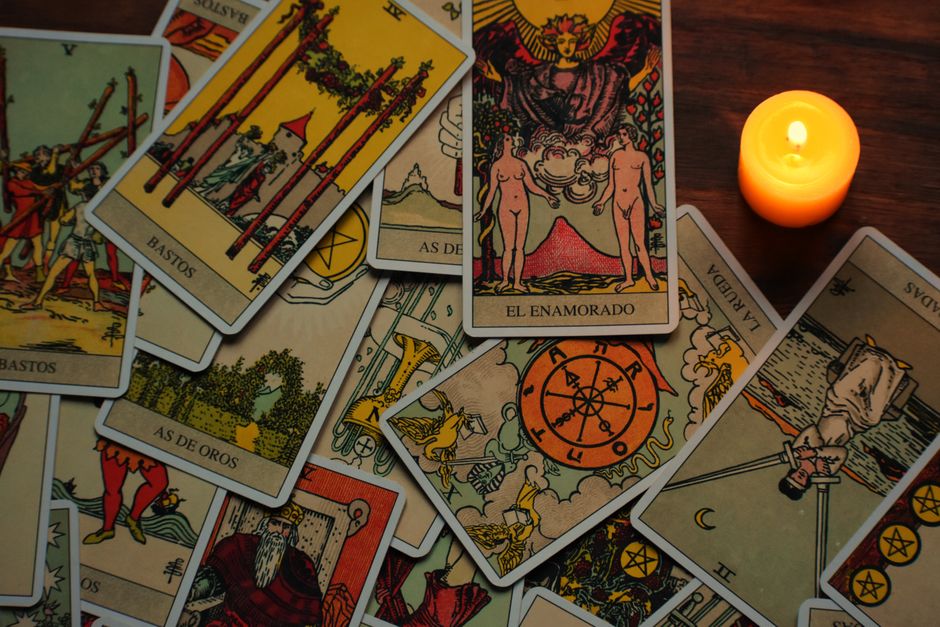
Once, a single mother came to me because her teenage son locked himself in his room playing video games and refused to communicate. She was so anxious that blisters had formed around her lips. Her hands trembled as she shuffled the cards, and she drew the Nine of Swords—waking up in the middle of the night, crushed by fear. Instead of rushing to interpret the card, I looked into her eyes and said softly, 'You've been carrying this family alone, and it's been incredibly hard. These anxieties have been pressing on your heart for a long time, like a chain tightening around you, haven't they?' Her tears poured out. She grabbed my hand and couldn't speak a complete sentence. It turned out she wasn't just afraid her child was wasting his life; her deeper fear was that she had failed as a mother and was unworthy of the custody she had fought for after the divorce. Once her emotions settled, I looked with her at the other card—the Queen of Wands reversed. A mother whose energy was blocked, depleted, unable to give anymore. 'Look,' I said, pointing to the drooping sunflower on the card, 'Is this really just about the child? Has this queen poured every last bit of her flame into others' stoves, forgetting to keep a spark for herself?' She froze, tears still on her face, but her eyes gradually refocused. That mother, who initially only wanted to 'fix her son,' murmured to herself, 'I haven't looked in the mirror in a long time. I've forgotten who I am besides being a mother.' At that moment, healing truly began—not because I gave any clever advice, but because tarot helped her find the self she had abandoned in the wilderness.
2. Common Misconceptions: Absolute Pronouncements and Rigid Interpretations
In all my years of tarot reading, nothing disgusts me more than absolute pronouncements like 'You'll meet someone within three months' or 'He still has feelings for you.' Valuable tarot never takes away your choices; instead, it solemnly returns the dormant power to your hands. Fate is a dynamic picture woven from countless present choices, and you are always the one holding the pen.
Misconception 1: Tarot Can Predict an Absolute Future
Tarot reflects your current energy state and subconscious tendencies, not an unchangeable destiny. The future is open, and every choice you make changes it. If you draw the Death card, don't panic about endings; see the necessity of transformation. If you draw the Nine of Swords, don't dwell in anxious nightmares; resolve to tackle the specific problems that torment you at night. Tarot gives you a key, not a verdict.
Misconception 2: Card Meanings Are Fixed
The most authoritative meaning of a card is always etched in the querent's life, not printed in any handbook. The handbook says Temperance means balance and moderation. But when a woman who had just undergone breast surgery drew it, her fingers trembling as they traced the two cups in the angel's hands, she said something I will never forget: 'I understand now. I used to act like a man, fighting fate head-on. This scar tells me I need to learn to gently balance health, work, and emotions like this water, so I can truly live.' The light in her eyes was more precise and powerful than any interpretation.
Misconception 3: The Tarot Reader Is a 'Master' or 'Channeler'
A tarot reader is not a fortune-teller or a channeler, but a companion and a mirror. A good reader will first lean in and listen to you, not rush to flip cards and give orders. They use psychology, empathy, and card symbolism to help you sort through your inner world. If you encounter a reader who claims to 'change your luck' or 'perform rituals,' walk away immediately—it's likely a scam.
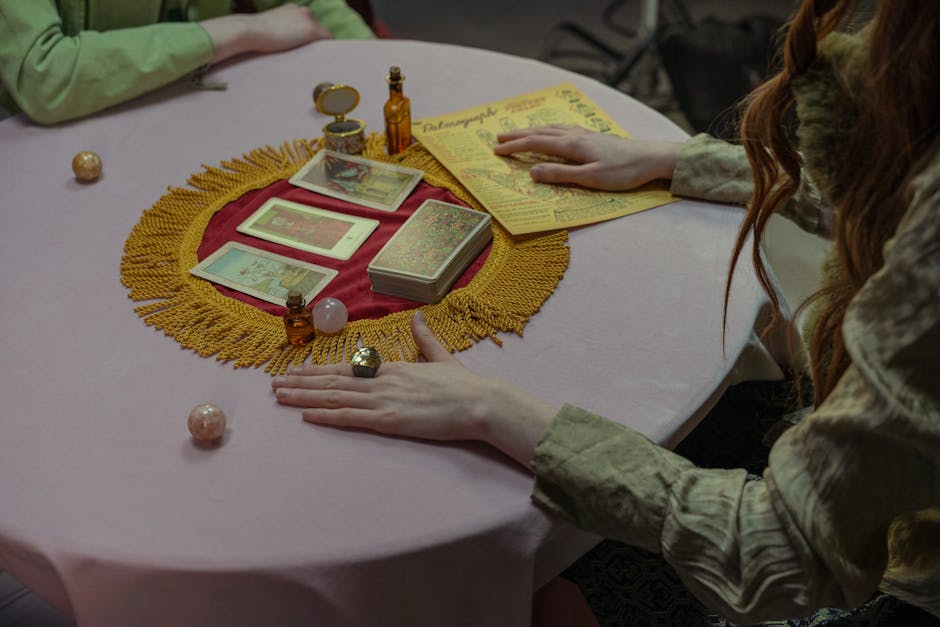
3. How to Use Tarot Rationally: Practical Advice
If you are at a crossroads in life and considering whether to push open the door with a tarot cloth hanging, here is some advice based on a decade of experience:
- Clarify your purpose: Ask yourself: Do you want a 'definite answer,' or do you want to understand your situation and inner self better? If the former, tarot may disappoint you; if the latter, tarot can be a good tool.
- Choose a reliable reader: Look for someone who listens first, doesn't jump to conclusions, and doesn't sell anxiety. Observe if they respect your emotions and encourage you to make your own decisions.
- You can learn it yourself: Tarot is not mysterious or inaccessible. You can learn the basics through books and online resources, then draw one card daily for self-reflection. Remember, the cards are your mirror, not your master.
- Combine with real action: The insights tarot offers must ultimately translate into action. For example, if you see the Star card, reminding you to regain hope, do one small thing that brings you hope. If you see the Tower card, signaling a need to break old patterns, make a courageous change.
In my reading room, I have a calligraphy piece from a friend that reads: 'View the cards as you view the heart.' Before each reading, I place my hands on the deck, close my eyes for three seconds, and tell myself: The person sitting across from you is not just a mouth or a case, but a whole living being with pain and hope. Every syllable you utter must flow through a warm heart. If you want to experience this kind of self-awareness, try our online tarot reading, which follows the same principle of rationality and companionship.

4. Tarot and Psychology: Synchronicity and Self-Awareness
The mechanism of tarot aligns closely with the psychological concept of 'synchronicity.' Jung believed that when a meaningful coincidence occurs, it is not random but reflects a deep connection between inner psychological states and external events. Tarot cards are an 'externalization' of your inner state—the card you draw often precisely corresponds to your current confusion, fear, or desire. This is not magic; it is your subconscious speaking through the cards. Therefore, tarot can be an effective tool for self-awareness, helping you identify repressed emotions, unmet needs, and recurring patterns.
For example, a middle-aged man in a suit came to ask about his career bottleneck. As he shuffled, a card jumped out—the Six of Cups. He glanced at it and sneered, 'I'm here to ask about investments. What use is this lovey-dovey card?' Instead of being intimidated by his resistance, I asked softly, 'How long has it been since you did something simply because you liked it? Not because of KPIs or financial reports.' He froze, the business smile frozen on his lips. After a long pause, he took off his glasses and wiped his face hard. Then I heard a completely different story—he had once been a child who loved astronomy, dreaming of exploring the stars. But his father died early, so he had to study finance desperately to support his family. Twenty years later, he was successful, but there was always a hole in his heart letting in cold wind. 'This card,' I said, pointing to the Six of Cups, 'is not asking you to dwell in the past. It's asking if it's time to bring that child with a dream back to the present and give him a drink of water.' He left without asking any questions about investment directions. Months later, I saw a photo on his social media: he had built an astronomy experience center for teenagers on the outskirts of the city. The light in those children's eyes was more moving than any financial report.

Frequently Asked Questions
Q: Can the results of a tarot reading be changed?
A: Yes, and they should be changed. Tarot reflects your current energy state and subconscious tendencies, not an unchangeable destiny. The future is open, and every choice you make changes it. If you draw the Death card, don't panic about endings; see the necessity of transformation. If you draw the Nine of Swords, don't dwell in anxious nightmares; resolve to tackle the specific problems that torment you at night. Tarot gives you a key, not a verdict.
Q: How can I tell if a tarot reader is reliable?
A: A reliable tarot reader will first listen to your story, not rush to flip cards and draw conclusions. They will encourage you to make your own decisions, not make decisions for you. They avoid words like 'absolutely,' 'definitely,' or 'must,' and do not sell luck-changing products or rituals. They respect your emotions, allow you to cry or be angry, and guide you to see your own power. If you encounter a reader who claims to 'change your luck' or 'perform rituals,' walk away immediately—it's likely a scam.
Q: Can I learn tarot on my own? What do I need?
A: Absolutely. Self-learning tarot requires no special conditions—just a deck of tarot cards, a beginner's book (such as You Already Know How to Read Tarot), and an open mind. I recommend starting by drawing one card daily, recording your feelings and associations, and gradually familiarizing yourself with each card's symbolism. You can also join online communities or read our blog for more tips. Remember, tarot is a tool, not a belief; its value lies in helping you reflect on yourself, not in predicting the future.