Nine of Swords
Nine of Swords meaning explained: anxiety, nightmares and 3 a.m. worry upright; recovery and release reversed. Love, career and finance readings.
Imagery & Core Meaning
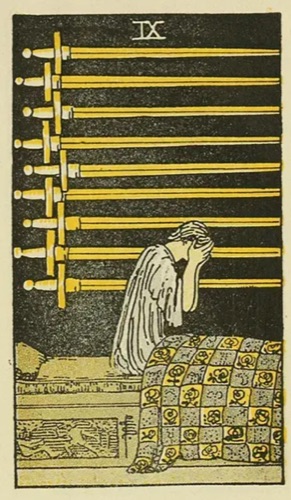
In the Rider-Waite image, a figure sits bolt upright in bed in the dead of night, face buried in both hands, nine swords hanging on the wall behind. The quilt is patterned with roses and zodiac signs, and the bed's base is carved with a scene of one person defeating another. It is tarot's most literal '3 a.m.' card: the room is actually safe — the torment comes from voices replaying inside the mind.
The core energy of the Nine of Swords is anxiety, insomnia, and guilt. Nine is near completion, and in the suit of Air it marks worry piled to its peak, erupting in the small hours. It appears when you're tormenting yourself over what hasn't happened or can't be changed, suggesting the pain is real but magnified — worth taking seriously, not worth believing wholesale.
▲ Nine of Swords Upright Meaning
Upright, the Nine of Swords marks a peak of mental self-consumption: worry inflates into catastrophe at night, and the composure you maintain by day collapses the moment you're alone. You may be punishing yourself for past mistakes or pre-paying suffering for an uncertain future.
The card validates your pain while pointing out its disproportion to reality. It tends to show up at the darkest hour — and as a nine, it also says this is the crest of the pressure. From here, the sky only gets lighter.
💞 Love
In love, the upright Nine of Swords can show lying awake over a relationship: replaying a partner's words, agonizing after a breakup or argument. Distinguish the real issues that need facing from the storylines your mind writes at midnight.
💼 Career
At work, this card often maps to career anxiety: fear of layoffs, dread of botching a project, endless rumination over one mistake. Your stress is now costing you sleep — instead of rehearsing a hundred failures, write down the worst case and one practical contingency plan.
💰 Money
Financially, it usually means losing sleep over money: bills, debt, or unstable income feeding a loop of panic. Anxiety generates no cash flow — convert the dread into a concrete list of inflows, outflows, and repayment order. Action is the only antidote to this kind of fear.
▽ Nine of Swords Reversed Meaning
Reversed, the Nine of Swords usually signals the darkest hour passing. You become willing to reach out, speak the fears aloud — and they tend to shrink once spoken. Recovery, release, and sleeping through the night again are common themes of this reversal.
In some cases, though, the reversal shows anxiety being pushed deeper, or numbness substituting for resolution. If you've simply stopped feeling the worry without addressing it, the card gently notes that avoidance charges interest elsewhere.
💞 Love
Reversed in love, the torment is easing: you may finally release an obsession, or find the courage to voice your suspicions and discover most of them were unfounded. If you're still hurting, the card urges you to lean on friends or a professional rather than suffer alone.
💼 Career
Career-wise, the reversal shows pressure releasing: the project lands, or you stop flagellating yourself over outcomes you couldn't control. Some people realize here that work anxiety has been damaging their health and start genuinely pacing themselves — the right move.
💰 Money
Financially, the reversal indicates panic settling, perhaps as a problem resolves or support arrives. While your head is clear, build an emergency buffer and a steady bookkeeping habit so you don't slide back into all-night arithmetic.
✦ Advice from This Card
The Nine of Swords advises you to write the 3 a.m. voices down and read them again at noon — you'll find nine out of ten can't survive daylight. The card doesn't dismiss your worries; it asks you to move them from your head onto paper, from midnight back into the day. And if the pain exceeds what you can carry, asking for help isn't weakness — it's the single action this card most wants you to take.
❓ FAQ
Is the Nine of Swords a yes or no card?
It's generally read as a 'no,' or at least 'not in this state of mind.' The card suggests fear is distorting the picture, so decisions made from this position tend to be driven by panic rather than reality.
Does the Nine of Swords mean depression?
It does correspond to deep anxiety and despair, but tarot cannot diagnose anything. If this card appears alongside persistent low mood or insomnia, treat it as a nudge to take your mental state seriously and consider professional support.
Does the reversed Nine of Swords mean everything is fine now?
Usually it's a recovery signal: worry releasing, help arriving, the worst passing. But if the 'improvement' feels like numbness or avoidance, the reversal may indicate the issue was suppressed rather than solved — worth watching the difference.