Qi Men Dun Jia (奇门遁甲), an important branch of ancient Chinese metaphysics, revolves around the interplay of several key symbols in its chart interpretation. Many beginners feel overwhelmed by complex charts, often because they haven't clarified the relationships among Ri Gan (日干, the Day Stem), Shi Gan (时干, the Hour Stem), Zhi Fu (值符, the Value Star), and Zhi Shi (值使, the Value Messenger). This article starts with basic concepts, breaking down their roles and interaction rules in plain language, helping you quickly build a clear framework for chart analysis.

1. Basic Positioning of the Four Symbols
In Qi Men Dun Jia, Ri Gan, Shi Gan, Zhi Fu, and Zhi Shi represent different dimensions:
- Ri Gan (日干): Represents the person seeking guidance—the subject of the whole matter.
- Shi Gan (时干): Represents the specific matter inquired about—the concrete manifestation of the situation.
- Zhi Fu (值符): The highest energy field of the entire chart, representing the general trend and external environment.
- Zhi Shi (值使): The execution process of the matter, guiding the development path of the event.
Simply put, Zhi Fu sets the overall trend, Zhi Shi determines the process, Ri Gan defines the self, and Shi Gan defines the matter. Their interplay outlines the full picture of the situation.
2. Different Interpretations When Zhi Fu and Zhi Shi Are in the Same Palace vs. Different Palaces
In practice, first determine whether Zhi Fu and Zhi Shi are in the same palace, as this dictates the subsequent analysis logic.
Same Palace
When Zhi Fu and Zhi Shi share the same palace, the energy field is concentrated. Focus on the generating/controlling relationship between Shi Gan and Zhi Shi:
- Shi Gan generates Zhi Shi: The matter progresses smoothly with ample support.
- Shi Gan controls Zhi Shi: Obstacles abound, and progress stalls.
- If they are in harmony, refer to the relationship between Ri Gan and Zhi Shi.
Different Palaces
When Zhi Fu and Zhi Shi are in different palaces, the energy is dispersed. Judgment must be layered:
- Ri Gan vs. Zhi Fu: Determines the initial trend.
- Shi Gan vs. Zhi Shi: Determines the final outcome.
In either case, consider the strength or weakness of the four symbols (Wang, Xiang, Xiu, Qiu, etc.). Strong phases amplify the effects of generation/control, while weak phases diminish them.
3. Zhi Fu: The Supreme Authority of the Chart
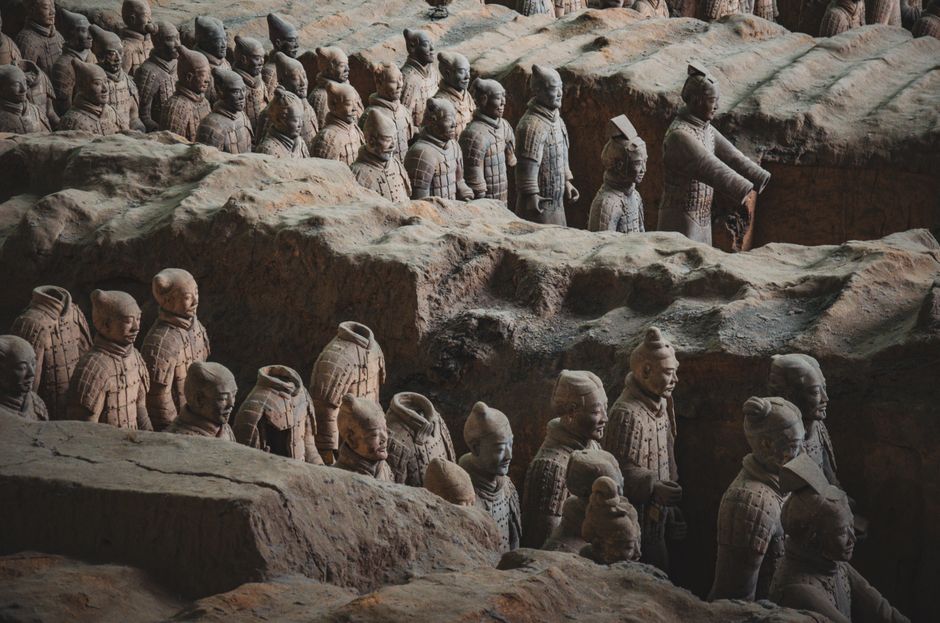
Zhi Fu is the leader of each ten-day period (Xun), governing the energy field for ten two-hour periods. It is the most central force in the entire chart. The Zhi Fu palace is always active, while other palaces are passive. It represents the irresistible general trend, and all human affairs must align with its energy.
4. Zhi Shi: The Executor of the Matter
Zhi Shi corresponds to the earthly branch of the specific hour and dominates the execution level. It must function within the framework of Zhi Fu's general trend. The Zhi Shi palace can generate or control other palaces but cannot counteract Zhi Fu. The optimal pattern is Zhi Fu generating Zhi Shi, where the general trend supports the process; the worst is mutual control between them, indicating internal and external conflict.
5. Shi Gan: The First Key in Prediction
Qi Men Dun Jia is time-centered; each hour corresponds to a unique energy field. Shi Gan, as the marker of this hourly energy, directly defines the energy distribution across the nine palaces. Therefore, in practice, always first examine the state of Shi Gan and its relationships with other symbols.
6. Practical Application of Ri Gan and Shi Gan
If the person seeking guidance is the subject themselves, focus on the relationship between Shi Gan and Zhi Fu/Zhi Shi. If inquiring on behalf of someone else, focus on the relationship between Ri Gan and Zhi Fu/Zhi Shi. Ri Gan represents the self's state, while Shi Gan represents the matter itself. Their generating/controlling relationships with Zhi Fu and Zhi Shi determine the auspiciousness of the matter.
For example, if Ri Gan generates Zhi Shi, it indicates the self actively contributes, favoring success. If Ri Gan controls Zhi Shi, subjective resistance hinders progress.
7. Palace-Door Interactions and Nine Star Strength
Beyond the four symbols, you must also master the generating/controlling relationships between the Eight Doors (Ba Men) and palaces (Door oppression, control, harmony, and righteousness) as well as the waxing and waning of the Nine Stars (Jiu Xing). The Nine Stars correspond to heavenly timing; their strength directly affects the situation's direction. For instance, Tian Peng Star (天蓬星) belongs to Water and is strongest in winter, amplifying its malefic nature; in summer, when it is weak, its influence diminishes.
To delve deeper into the Nine Stars and palace-door interactions, refer to our Qi Men Dun Jia online charting tool to view star and door states in real time.
8. Understanding Qi Men Through Military Formation Architecture
Qi Men Dun Jia is essentially a model of military deployment: Jia (甲) is the hidden commander, Yi (乙), Bing (丙), Ding (丁) are the three advisors, and Wu (戊), Ji (己), Geng (庚), Xin (辛), Ren (壬), Gui (癸) are the six generals. The fixed order of the Three Advisors and Six Generals is Wu → Ji → Geng → Xin → Ren → Gui → Ding → Bing → Yi, which is the foundation of all chart layouts.
Combined with the Nine Stars, Eight Doors, and Eight Spirits (Ba Shen), they form 64 parameter groups, simulating a holographic model of heaven, earth, humanity, time, and space. Mastering this structure provides a holistic understanding of Qi Men.

9. Symbolism of the Ten Celestial Stems and the Twelve Growth Stages
The Ten Celestial Stems form the basic skeleton of Qi Men, each with unique symbolic meanings. For example, Jia represents a pillar, Yi represents flowers and grass, Bing represents blazing fire, Ding represents sparks, etc. The Twelve Growth Stages (Chang Sheng, Mu Yu, Guan Dai, etc.) describe the energy cycle from birth to death, key to judging the depth of auspiciousness or inauspiciousness.
For instance, if Shi Gan falls in the Di Wang (Emperor) stage, the matter is at its peak; if in Mu Jue (Tomb/Death) stage, it may be beyond recovery. Mastering the stems' strength greatly improves interpretation accuracy.
Frequently Asked Questions
Q: Which is more important, Ri Gan or Shi Gan?
A: Both are important but with different emphases. Ri Gan represents the self, while Shi Gan represents the matter. When the person inquires for themselves, the relationship between Shi Gan and Zhi Fu/Zhi Shi more directly determines the outcome; when inquiring for others, Ri Gan is more critical. In practice, consider the specific context.
Q: How does the generating/controlling relationship between Zhi Fu and Zhi Shi affect the result?
A: If Zhi Fu generates Zhi Shi, the general trend supports the process, making success likely. If Zhi Fu controls Zhi Shi, the general trend suppresses the process, leading to difficulties. If they are in harmony, consider other factors. This is the core of judging smoothness or obstruction.
Q: How to quickly determine the strength of the Nine Stars?
A: According to the Yan Bo Diao Sou Ge (Song of the Old Fisherman on the Misty Waves), a star is strong (Wang) in the month it generates; moderate (Xiang) in the month of the same element; resting (Xiu) in the month it can control; imprisoned (Qiu) in the month that controls it; and discarded (Fei) in the month that generates it. For example, Tian Peng (Water) is strong in Yin and Mao months (Wood, as Water generates Wood), moderate in Hai and Zi months (Water), resting in Si and Wu months (Fire, as Water controls Fire), etc.
For more practical techniques, visit our Qi Men Dun Jia knowledge base for systematic tutorials.